For your auditor
The trace, the records behind it, and who signed what.
The auditor signs in, read only, and reads it the way they already read a plan. Every limit carries its clause, a second person verifies, and nothing is edited after the fact.
For seafood processors
Traceability, food safety records and operations for seafood processors, in one system.
Built on a Tasmanian processing floor. Ready now for sea urchin and oysters.
Today
Clipboard, whiteboard, phone, spreadsheet. However many you use, none of them knows about the lot. So it is copied by hand each time, and the audit is the day you find out which copy was wrong.
One record, written once, used six times. Nothing is copied by hand.
One record, written once, used six times. Nothing is copied by hand.
The same goes for every form, check and schedule in your food safety plan.
How it works
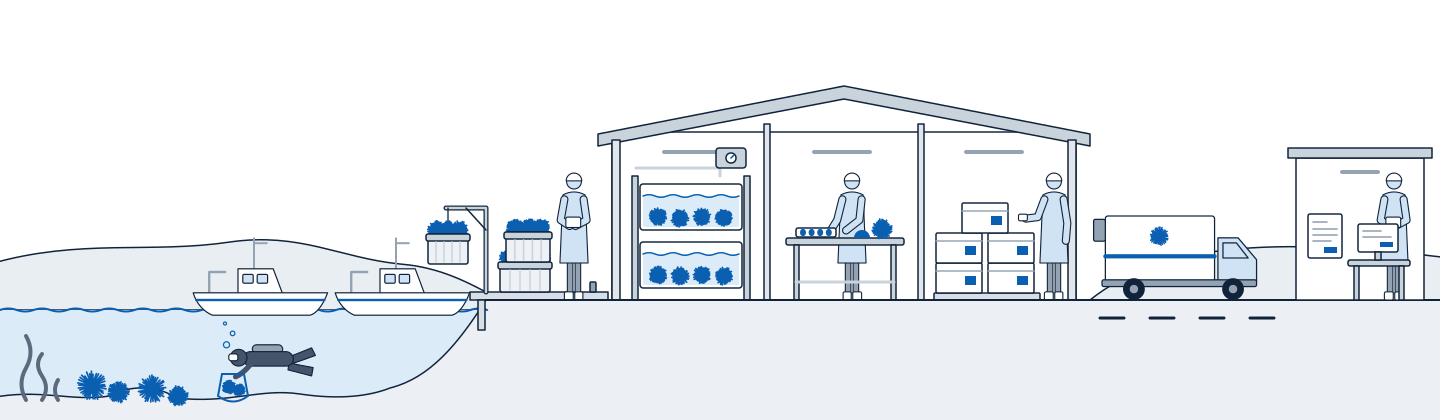
The area's status is checked before the landing is accepted.
Your customer scans the pack and sees the dive site, the harvest day and the processing day.
Your auditor signs in, read only, and sees the whole trace in under a minute.
One example: a sea urchin lot. We set TrueBatch up around how your factory already runs: your process steps, your tanks, cool rooms and benches, your limits and your label sizes.
Then run the recall
Each step leaves a record like this one. Any carton is traced back to the landing and forward to the customer in a minute, then printed.
The record it leaves
The landing arrives
Who caught or grew it, which area, whether the area was open, and how cold it was when it landed. Checked against your limit as it is entered, by the person who did it.
Sample records from a demo business. People and businesses are invented.
One record, three uses
Every check, weight and reading is recorded once, by the person who did it, as the work happens. That one record comes out three ways.
For your auditor
The auditor signs in, read only, and reads it the way they already read a plan. Every limit carries its clause, a second person verifies, and nothing is edited after the fact.
For your customers
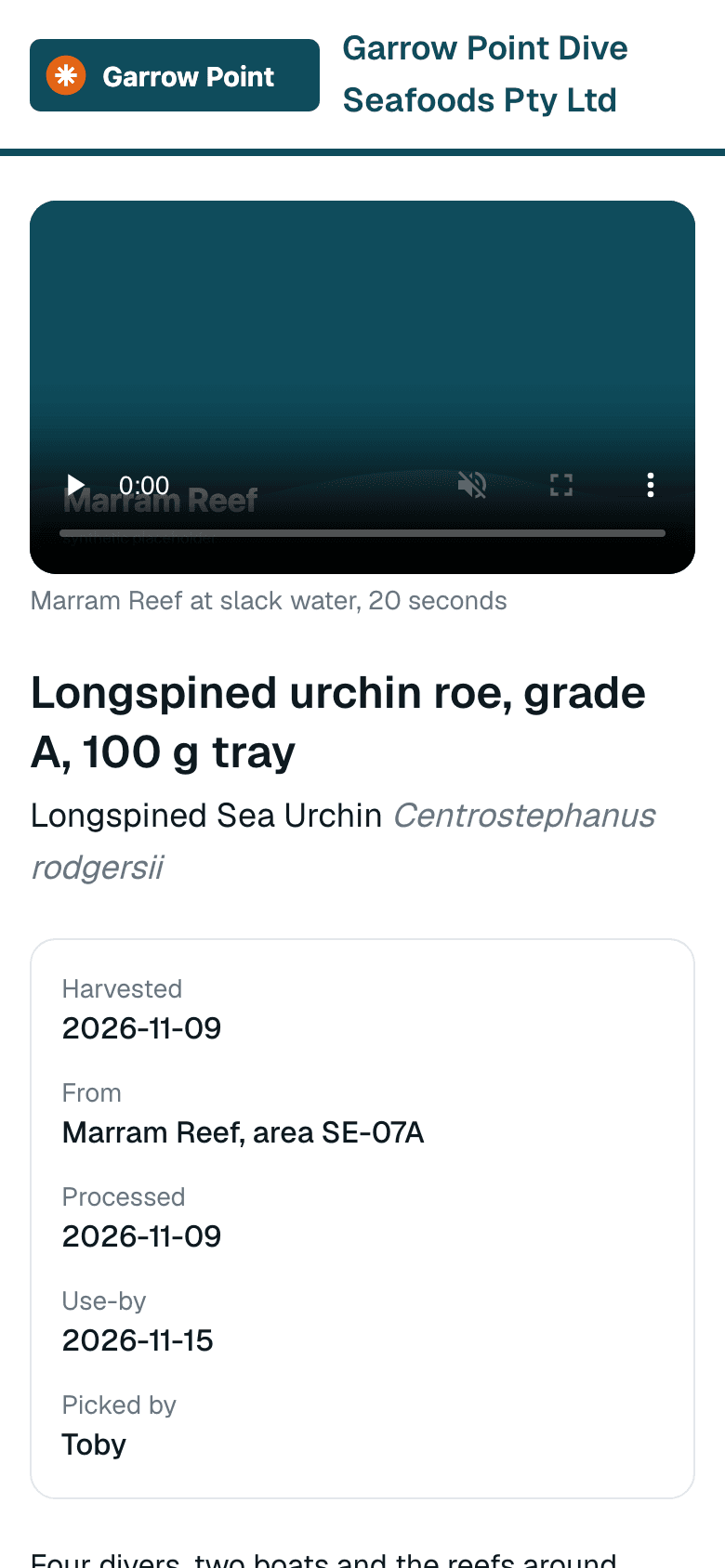
Buyers, chefs and diners scan it and see the lease or dive site, the harvest day and the processing day. In your colours, with your story, from your own records. On or off, per business.
For you
No evening re-typing. The dashboard shows what is due today, what was missed and what breached, before the auditor does.
Illustrative figures from a demo business.
Your food safety plan
Most findings are not bad practice. They are a check that was forgotten, a limit nobody wrote down, or a fail that was never followed up. TrueBatch is built so those three cannot quietly happen. We sit with auditors to learn where small processors get caught, and build the check that catches it first.
Your process steps, forms, limits, schedules, labels and even the words on the screen are settings. You change them yourself, every change is kept with a note, and any version can be restored.
Every limit carries the clause and plan version it comes from. A reading is checked against it as it is entered.
A breach, a failed check or a logger out of range opens a corrective action on its own, with photos when it is raised and when it is closed.
On the floor and in the office
Your crew
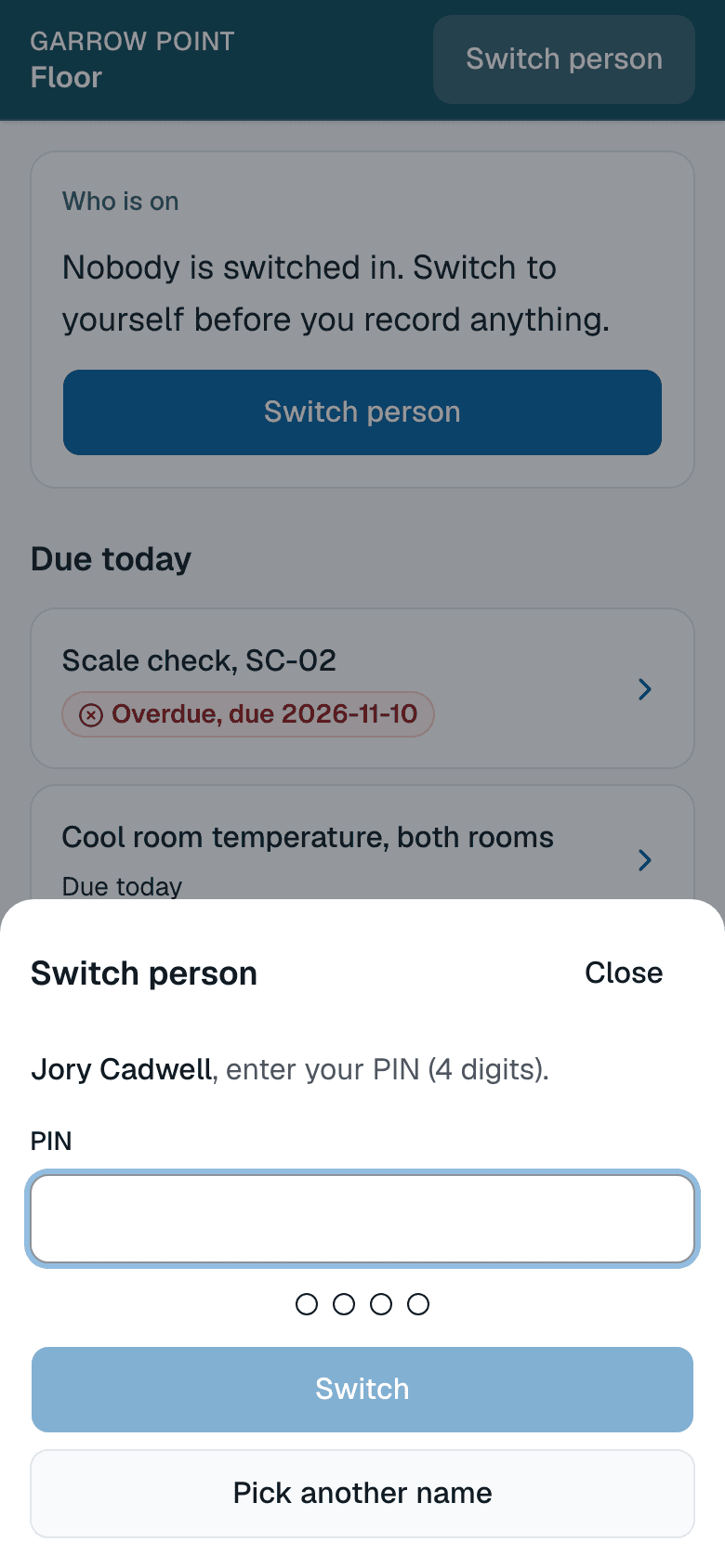
Each person signs in as themselves, or the shed shares one iPad and each person enters a PIN before they record. Either way the record carries who did it. Big buttons for wet hands, and photos straight from the camera.
Your customers
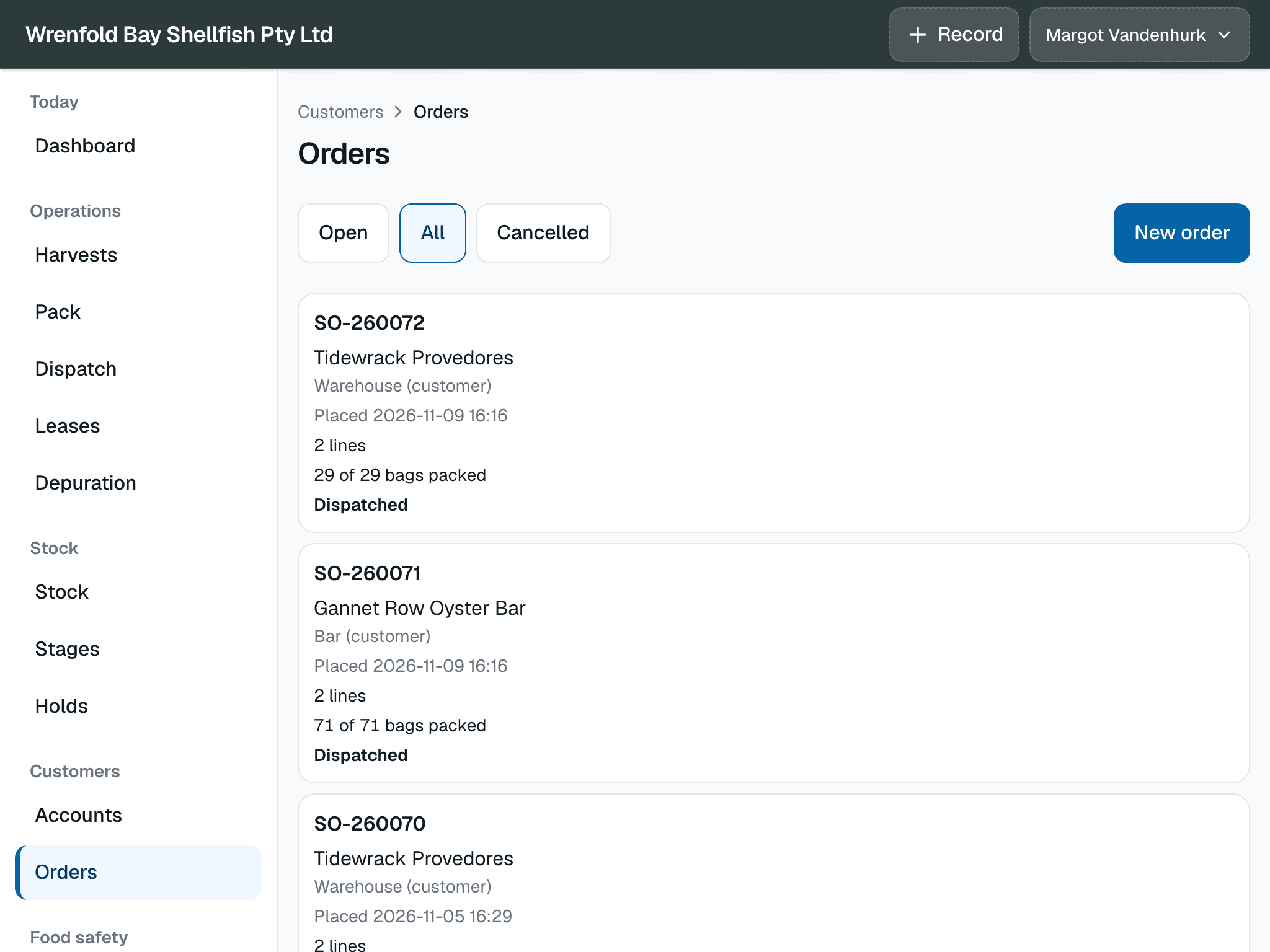
Each customer has a page. They order from today's availability on their own phone, or you enter it for them. Packing takes the oldest stock first, so every carton leaves with the right lot and use-by on it.
Try it on your own shed
Your rules
Each rule is shown with its clause.
No sign-up.
Your paperwork
9 forms: 144 hours a year.
On the floor alone, at 4 minutes a form.
Seven more questions. We claim no saving.
Who it's for
Set up today for sea urchin and oysters, farmed or wild. Abalone, rock lobster and finfish are next, and we are talking to processors in those fisheries now.
Available now
Area status checked before the harvest is accepted, the harvest record inside 24 hours, the tag with the lease on it, from the phone on the lease. Already use a farm tool on the water? Keep it. TrueBatch starts at the landing.
Available now
Closure status checked at receival, receival temperatures and yield by source, in one place.
Next, with a design partner
Dockets, live holding and the export records kept the way the DAFF assessor reads them.
Next, with a design partner
Receival temperatures, standard fish names on every document, and yield by species without a spreadsheet.
Area status checked before the harvest is accepted, the harvest record inside 24 hours, the tag with the lease on it, from the phone on the lease. Already use a farm tool on the water? Keep it. TrueBatch starts at the landing.
Closure status checked at receival, receival temperatures and yield by source, in one place.
Dockets, live holding and the export records kept the way the DAFF assessor reads them.
Receival temperatures, standard fish names on every document, and yield by species without a spreadsheet.
Free traceability check
We sit with you for 30 minutes, walk one lot from receival to dispatch, and you keep the gap list whether or not you buy.
BlueBatch is built by Simon de Moor, based in Tasmania, from a working system in a Tasmanian processing shed. We start with how your business works, not with the software. Your data is yours, and exports as spreadsheets any day you ask.
Illustrative screens from a demo business.
Illustrative screens from a demo business.
The checks your plan says are verified go to a queue for someone other than the person who recorded them.
Swabs, calibration, cleaning, the monthly review and expiring licences sit on the manager's dashboard as due, overdue or breached.
Records cannot be edited after the fact. A correction is a new record that points at the original, with who and when.